.png)
The Australian e-bike market is booming. Industry estimates put national sales at close to 289,000 units in 2026, generating over $1.25 billion. With the average e-bike price sitting around $4,500, it is a purchase you want to get right.
Understanding a few key features - motor type, battery range, frame style, and Australian laws - makes the choice much clearer. This guide walks you through everything you need to know before buying your first e-bike, written from a practical Australian perspective without brand rankings or affiliate links.
Before comparing specs, you need to know what is legal to ride on Australian roads and paths. Riding an illegal e-bike means you could face fines, have your bike seized, or find yourself riding an uninsured motor vehicle.
An e-bike (Electrically Power-Assisted Cycle or EPAC) must meet these requirements:
If your e-bike meets these criteria, it is legally treated as a bicycle. In most states and territories you will not need a licence, registration or compulsory insurance, but requirements differ - check with your state or territory transport authority. You just follow normal road rules, ride on the left, obey traffic signals, and wear a helmet.
In late 2025, the Federal Government reinstated import requirements under EN 15194, banning the import of e-bikes with motors exceeding 250W. This followed a period of relaxed regulations that saw non-compliant, high-powered e-bikes enter the market.
NSW went further. From February 2026, all e-bikes and batteries sold in NSW must be independently certified. NSW Police have powers to seize and crush illegal e-bikes. Riding a non-compliant 750W throttle model is treated as riding an unregistered, uninsured motor vehicle, which carries heavy fines and potential court appearances.
Always buy a 250W pedal-assist e-bike that is EN 15194 certified. Marketing claims like "1000W but limited to 250W" do not hold up. The hardware rating is what matters in the eyes of the law.
The motor is the heart of your e-bike, and the two main types feel very different to ride.
Hub motors sit inside one of the wheels, usually the rear. They spin the wheel directly, bypassing the bike's gears and chain. Most budget and mid-range e-bikes use rear hub motors because they are affordable and reliable. Riding a hub motor creates a pushing sensation, like someone giving you a gentle shove from behind. They are straightforward and work well for flat-to-gently-rolling terrain and city commuting. However, they can feel less natural on steep hills because they cannot leverage the bike's gears, and the added weight on the wheel slightly affects handling.
Mid-drive motors sit near the pedals at the bottom bracket and drive the chain directly. Because they use your bike's gears, they are far more efficient on hills and varied terrain. Riding a mid-drive feels like a natural extension of your pedalling. The power blends with your effort rather than feeling separate from it, making them ideal for hilly terrain, longer rides, and mountain biking. They typically cost $500 to $1,500 more than equivalent hub-motor bikes, cause more wear on the drivetrain, and can be more complex to repair.
Cadence sensors detect whether you are pedalling and how fast. The motor delivers a set amount of power based on your selected assist level, regardless of how hard you push. It can feel like an on/off switch - you start pedalling, and after a slight delay, the motor kicks in at full power for that level.
Torque sensors measure how hard you pedal and adjust motor power proportionally. If you push harder up a hill, you get more help. Ease off on the flat, and the motor backs off too. It feels natural, and because they only deliver power when you need it, torque sensors use less battery. Most mid-drive e-bikes feature torque sensors, while budget hub-motor bikes tend to use cadence sensors.
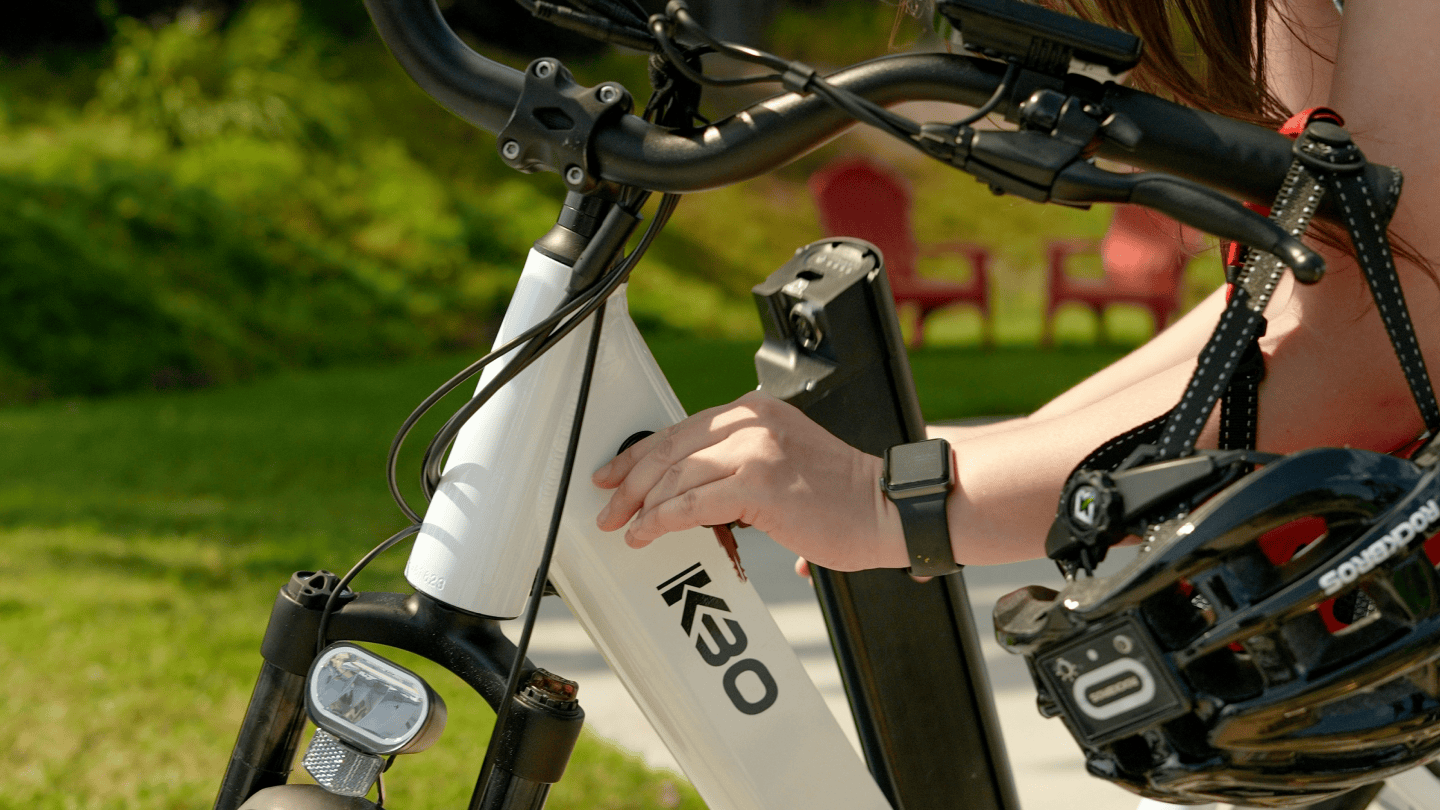
Battery capacity is measured in watt-hours (Wh). A 400 Wh battery covers shorter commutes, giving you roughly 20 to 40 kilometres of real-world range. Moving up to a 500 Wh battery covers 30 to 60 kilometres, which is plenty for most commuters. For longer rides or hilly terrain, a 625 to 750 Wh battery provides 50 to 90 kilometres of range.
Manufacturers often quote maximum range figures tested with a lightweight rider on flat ground in eco mode with no wind. Real-world range is typically 30 to 40 percent less. Hills can increase battery consumption by up to 30 percent, and rider weight, headwinds, higher assist levels, cold weather, and low tyre pressure all reduce range. Take the advertised range, reduce it by a third, and make sure that number comfortably covers your daily needs with a buffer.
Removable batteries let you charge at your desk or in your apartment without bringing the whole bike inside. Integrated batteries look sleeker but require you to park the bike near a power point.
E-bikes are designed for specific scenarios. Commuter e-bikes are one of the most popular categories in Australia, designed for daily rides with practical features like mudguards, racks, lights, and an upright riding position. Folding e-bikes work well if you combine cycling with public transport or live in a small apartment. They have smaller wheels and fold down, though they offer slightly less stability and a shorter range of 25 to 50 kilometres.
Cargo e-bikes are built to carry groceries, kids, or tools, with some handling up to 150 kg of payload. They cost between $3,000 and $6,000 but can genuinely replace a second car. Mountain e-bikes feature suspension and knobby tyres for off-road trails. They are overkill for commuting but excellent for weekend riding.
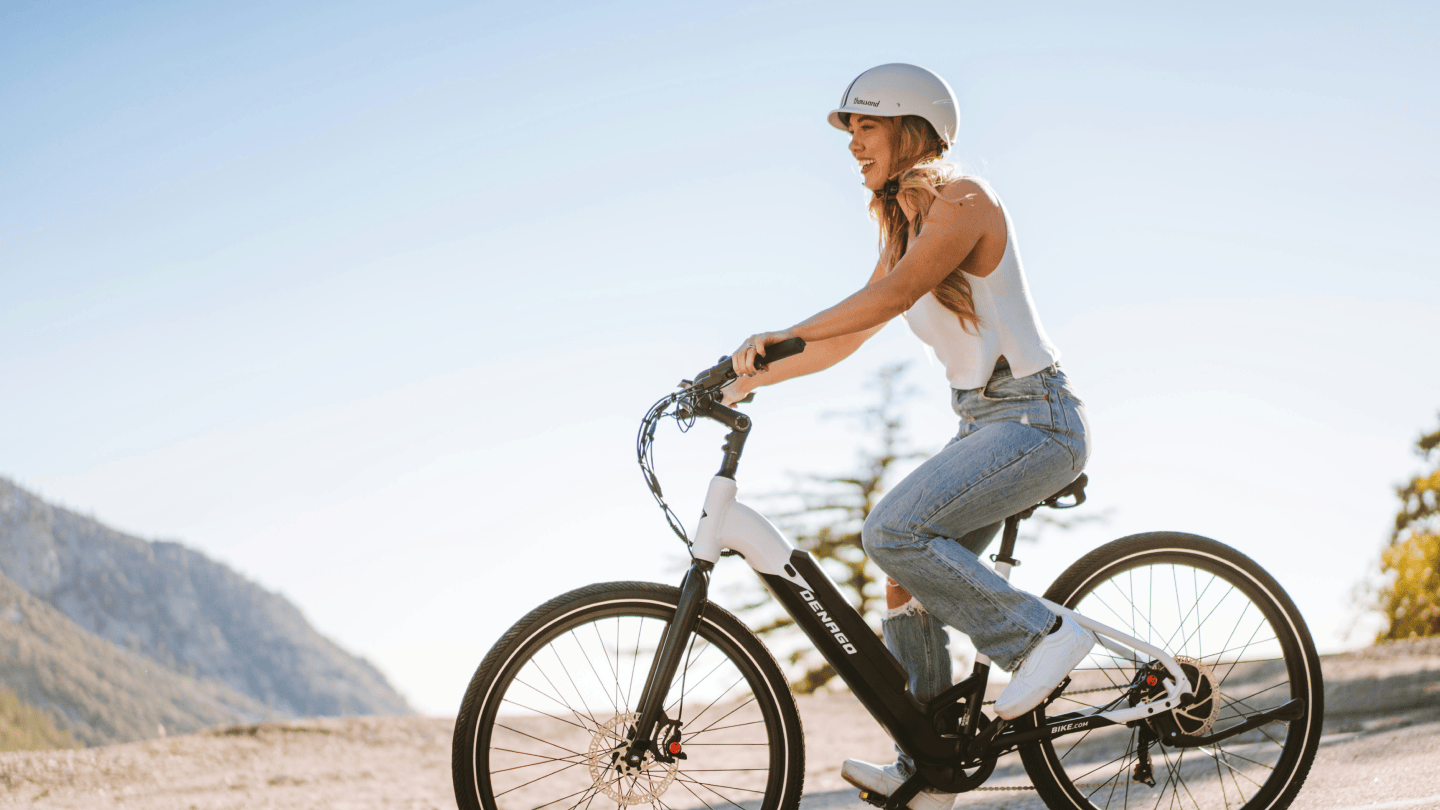
Frame geometry affects how you interact with the bike. Step-through frames have no top bar, allowing you to mount easily without swinging your leg over. They offer a lower centre of gravity for better handling, especially when carrying cargo. Step-over traditional frames have the classic triangle shape, offering more structural rigidity for performance riding. Mixte or trapeze frames split the difference, sloping the top tube down for more clearance than a step-over.
Most e-bikes weigh between 20 and 30 kg. The motor handles the weight while riding, but lifting the bike is a different story. If you need to carry the bike up stairs, lift it onto a car rack, or navigate steps into a storage area, aim for a lighter model under 22 kg or a folding e-bike. Removing the battery before lifting instantly saves a few kilograms.
Entry-level e-bikes run from $800 to $1,200. These bikes work, but you will find cadence sensors, mechanical disc brakes, shorter battery range, and heavier frames. Some retailers avoid selling bikes under $1,500 due to concerns over uncertified batteries and warranty support.
Mid-range bikes between $1,500 and $2,500 are a solid choice for most Australian riders. This price point introduces hydraulic disc brakes, 500+ Wh batteries, responsive sensors, and a better ride feel.
Premium e-bikes from $2,500 to $5,000 and beyond feature mid-drive motors, torque sensors, larger batteries, and refined components. This tier suits daily riders, hilly commutes, and anyone wanting the most natural ride feel.
In your first year, you will need to budget for a helmet, a quality lock, lights if they are not integrated, and annual servicing. A replacement battery after three to five years costs between $400 and $900. Even with these costs, charging a battery costs cents, making an e-bike dramatically cheaper to run than a car.
Many Australian employers offer e-bike salary packaging through novated leases. You lease the e-bike through your employer, and repayments come from your pre-tax income. Tax treatment of e-bike salary packaging, including any Fringe Benefits Tax concession, depends on the arrangement and your circumstances - confirm the position with your employer and a registered tax adviser before you commit.
You choose your e-bike through a provider, your employer deducts lease payments from your pre-tax salary, and running costs are usually included. After four years, you own the e-bike. The bike must be primarily used for commuting to and from work, and you need to keep a logbook for the first three months.
Buying from a local bike shop allows you to test ride the bike, feel the motor, test the brakes, and check the frame size. Local shops handle assembly, fitting, and ongoing servicing.
Buying online is often cheaper and offers a wider range of brands. You miss out on a test ride, and you will need to assemble the bike yourself or pay a local mechanic. Trying a test ride before you buy helps you understand how different motors and sensors feel, even if you purchase a different brand online. Always check warranty terms for at least two years on the motor and battery, and confirm there is Australian-based support.
Is it EN 15194 certified? Ask the retailer for proof
Is the rated continuous power 250W? Ignore peak power claims
Does the battery suit my commute with a 30 percent buffer?
Can I physically manage the weight if I need to lift it?
Is the battery removable for charging?
What are the warranty terms and where is service handled?
Have I budgeted for a helmet, lock, lights, and servicing?
Does my employer offer salary packaging?
A quality e-bike is a significant purchase. Bicycle limits on home and contents policies vary widely, and cover for theft away from home, accidental damage, or the motor and battery may be limited or excluded - check your policy wording before you rely on it. Sundays e-bike insurance can cover theft, accidental damage and cover while you travel, depending on the options you choose — read the Bicycle Insurance PDS for the full terms, limits and exclusions.
Invest in proper security from day one. A quality lock, secure storage, and good habits help keep your e-bike safe.
What happens if I ride a non-compliant e-bike?
It's treated as an unregistered, uninsured motor vehicle — fines, seizure, and possible court action, especially in NSW.
Do I need a licence or registration?
No, if it meets the legal EPAC criteria. It's treated as a normal bicycle. Check your state authority for specifics.
Does e-bike weight matter?
Most weigh 20–30 kg. It's not an issue while riding, but matters if you need to lift it - look for sub-22 kg or folding models if so.
How much should I budget?
Entry: $800–$1,200. Mid-range: $1,500–$2,500 (best value for most riders). Premium: $2,500–$5,000+.
What extra costs come up later?
Helmet, lock, lights, annual servicing, and a replacement battery ($400–$900) after three to five years.
Can I buy through my employer?
Yes, via novated lease salary packaging in many workplaces. Tax treatment depends on the arrangement - confirm with your employer and a tax adviser.
Australian e-bike industry to exceed $1 billion in 2026 — NRMA — Industry sales and revenue figures (289,000 units, ~$1.3B) behind the market context in the guide's opening.
NSW Office of Fair Trading — E-bike Certification — Bicycle Industries Australia — Certification timeline and the accepted e-bike and battery safety standards for sale in NSW.
e-Bike Novated Leasing: A Smarter, Greener Commute — Remunerator — How e-bike novated leases and salary packaging work, including FBT treatment.
eBike Salary Sacrifice and Fleet Solutions — Sparque — Employer-side view of e-bike salary packaging arrangements and novated lease logistics.
E-Bike Certification Standards Australia (2026) Explained — True North — Comparison of EN 15194, AS 15194, and UL 2849, and what buyers should check before purchase.